What is Gazundering? (How to Avoid & Respond If It Happens)
Updated: March 2026
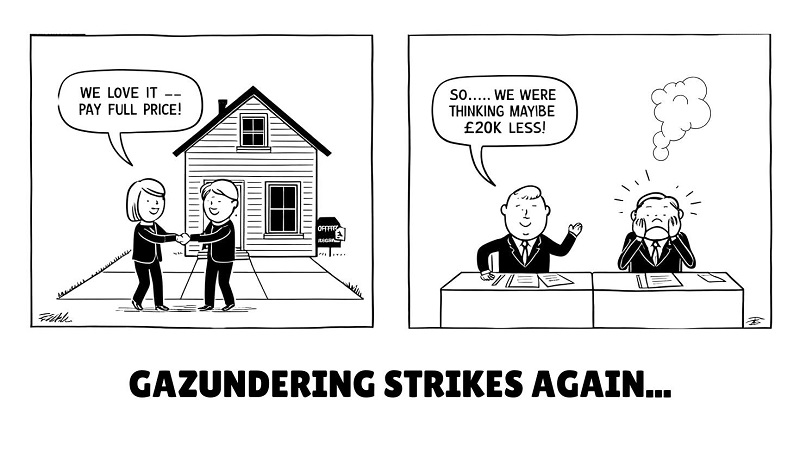
Gazundering is when a buyer lowers their offer on your property just before contracts are exchanged, often leaving sellers under pressure to accept or risk the sale falling through. It typically happens late in the process, when you’ve already taken your home off the market and committed time and money to the sale.
3 Key Takeaways:
- Gazundering is legal in England and Wales until contracts are exchanged.
- It often happens late in the process, when sellers feel pressured to accept.
- You can reduce the risk by choosing the right buyer and keeping the sale moving.
Is Gazundering Legal in the UK?
Yes, gazundering is legal in England and Wales until contracts are exchanged. Until that point, neither the buyer nor seller is legally bound, meaning the buyer can reduce their offer without breaking the law.
In Scotland, it is very rare. Once the missives are agreed, the sale becomes legally binding much earlier, making last-minute price changes far less common.
Related Read: What happens on completion day during contract exchange?
Why Does Gazundering Happen?
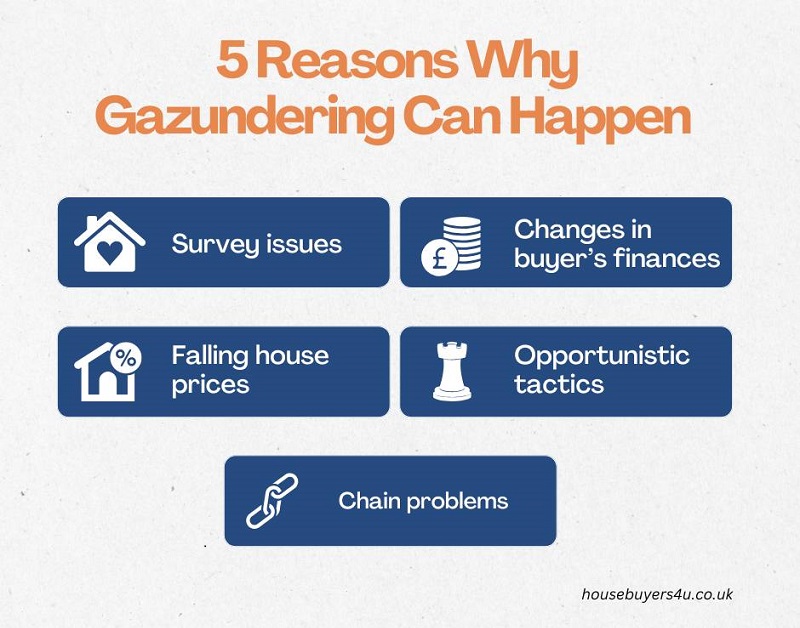
Gazundering usually occurs just before the exchange when buyers feel uncertain, pressured, or financially stretched. Some reduce their offer for genuine reasons, while others see an opportunity.
-
Survey issues: If a survey uncovers problems like damp, subsidence, or structural faults, buyers may lower their offer to cover repair costs.
-
Changes in buyer’s finances: Mortgage offers can change or expire, or buyers may re-evaluate affordability as costs rise.
-
Falling house prices: If the market dips between offer and exchange, buyers may adjust to reflect new local valuations.
-
Opportunistic tactics: Some buyers deliberately wait until the last minute to renegotiate, knowing sellers are under pressure.
-
Chain problems: If a buyer further up the chain is gazundered or pulls out, it can trigger a knock-on effect, reducing your buyer's offer.
A recent survey revealed that 31% of UK property sellers experienced gazundering, with 33% of these incidents occurring within a week of the exchange date. This underscores the importance of maintaining momentum and clear communication throughout the sale process to minimise last-minute renegotiations
How to Respond to Gazundering
If a buyer lowers their offer late in the process, you have three main options:
| Option | When it makes sense |
|---|---|
| Accept the lower offer | Small reduction, close to exchange |
| Negotiate | If the drop feels unfair but you still want to proceed |
| Walk away | If the offer is too low or clearly opportunistic |
Before making a decision, it’s worth taking a step back and assessing the situation:
- Ask for justification, such as survey results or financial changes
- Recheck your property’s market value to see if the new offer is still reasonable
- Consider the impact on your chain, especially if you’re relying on this sale to move forward
Staying calm and weighing up your options carefully will help you make the right call, rather than reacting under pressure.
Expert advice from our property expert Paul Gibbens:
"When a buyer drops their offer late in the process, it can feel like a punch to the gut but don’t rush your decision. I always tell sellers: take emotion out of it and assess the facts. If it’s a small drop and the deal is still solid overall, it might be worth accepting to keep things moving. But if it feels opportunistic or you’re being pressured unfairly, don’t be afraid to walk away.
A well-priced home in a decent area will usually find another buyer. The key is knowing your bottom line and being ready to act on it."
Can You Prevent Gazundering? (Tips to Reduce the Risk)
You can’t guarantee it won’t happen, but there are several innovative ways to reduce the risk of gazundering — and keep your sale on solid ground.
| Prevention Tip | Why It Helps |
|---|---|
| Set a realistic asking price | Reduces the chance of buyers trying to negotiate down later. |
| Be transparent about issues | Avoids surprise problems in surveys that prompt price drops. |
| Keep the sale moving quickly | Limits delays that give buyers time to reconsider or revalue. |
| Choose the right buyer | Chain-free, mortgage-ready buyers are less likely to gazunder. |
| Set an early exchange target | Keeps everyone focused and reduces opportunities for last-minute changes. |
| Maintain clear communication | Builds trust and discourages opportunistic behaviour. |
What We See in Practice (Hb4u Insight)
From what we see working with sellers, gazundering is rarely random. It usually happens when the buyer gains leverage during the process.
| Situation | What happens |
|---|---|
| Delays in the sale | Buyers have more time to rethink or renegotiate |
| Seller in a chain | Buyer knows the seller is under pressure to proceed |
| Costs already spent (legal, surveys) | Seller is more likely to accept a lower offer |
| Weak communication | Creates uncertainty and opens the door for price changes |
In simple terms, the more pressure a buyer senses, the more likely they are to test a lower offer.
The sellers who avoid this tend to keep momentum, set clear expectations early, and choose buyers who are financially ready and committed from the start.
Gazundering vs Gazumping
These two terms are often confused, but they mean very different things:
| Term | What it means | Who benefits |
|---|---|---|
| Gazundering | Buyer lowers their offer before exchange | Buyer |
| Gazumping | Seller accepts a higher offer after agreeing a sale | Seller |
In short, gazundering puts pressure on the seller to accept less, while gazumping puts pressure on the original buyer, who risks losing the property altogether.
Both are legal in England and Wales until contracts are exchanged, which is why understanding the risks on both sides is important when buying or selling a property.
Worried About Gazundering? We Offer a Safer Way to Sell
If you're concerned about being gazundered or already facing a buyer lowering their offer last minute, you're not alone — but you do have options. At Housebuyers4u, we buy houses fast and we remove the uncertainty of traditional sales by giving you a guaranteed cash offer, no hidden fees, and a timeline that works for you.
✅ No risk of gazundering
✅ No chains, delays, or renegotiations
✅ Completion in as little as 7–14 days
We've helped hundreds of sellers avoid the stress of fall-throughs and unexpected price drops. If peace of mind, speed, and simplicity matter to you — speak to our team today for a no-obligation offer.
Learn More About How to Sell Your House Fast in the UK
- Best Time of the Year to Sell Your House
- Should I Sell My House to Pay Off Debt?
- Selling Your House After Divorce
- How to Sell an Inherited Property Fast
- Sell House Due to Job Relocation
- Selling your House Due to Health Issues
- Selling a House in Poor Condition
- How to Sell a House with Bad Tenants
- How to Sell your Tenanted Property
- How to Sell My Flat Quickly
- How to Sell Your House to an Investor Fast
- How to Sell your House Online
- Selling Your House Without an Estate Agent in the UK
- How to Sell your Empty House Fast in the UK
- Common Mistakes When Selling Your Home
- Selling your Non-Standard Construction House
- How to Stage a House for Sale
- Sell My House Fast for Market Value UK
- Selling your House Due to Financial Difficulties
- Selling a House in Poor Condition
- How Long Does It Take to Sell a House UK?
- Selling Your House Due to Relocation or Emigration?
Find out how much we can Offer for your House