Selling a House in Poor Condition (What to Do and Your Real Options)

Updated: March 2026
Selling a house in poor condition is completely possible, but the route you choose will determine how fast you sell and how much you get. You can sell as-is through an estate agent, auction, or cash buyer, each with different trade-offs. The key is choosing the right option before spending money on repairs that may not increase your final sale price.
Key Takeaways:
- You can sell a house in poor condition without making repairs.
- Most buyers reduce their offer to reflect repair costs and risk.
- Your best option depends on whether you prioritise price, speed, or certainty.
What Does Selling a House in Poor Condition Mean?
Selling a house in poor condition or "as is"means putting a property on the market without fixing major issues such as damp, structural problems, outdated systems, or general disrepair. Buyers will typically factor these issues into their offer, reducing the price to reflect repair costs and risk.
What Counts as a “Poor Condition” Property?
A property is typically considered in poor condition if it has issues that reduce its value, limit mortgage eligibility, or require significant work before it can be lived in comfortably.
Common examples include:
- Damp or mould
- Roof damage or leaks
- Outdated or unsafe electrics or plumbing
- Structural movement (e.g. subsidence)
- Unmodernised interiors
- Signs of long-term neglect
Can you Sell a House in Poor Condition?
Yes. Houses in poor condition are sold regularly in the UK, even where major repairs, outdated features, or habitability issues exist. The key difference is the buyer type, with options typically including cash buyers, investors, auctions, or realistically priced open-market sales aimed at buyers willing to take on work.
How to Sell a House in Poor Condition
Selling a house in poor condition, also known as selling a house in bad condition, can be challenging, but with the right approach, you can get it done.
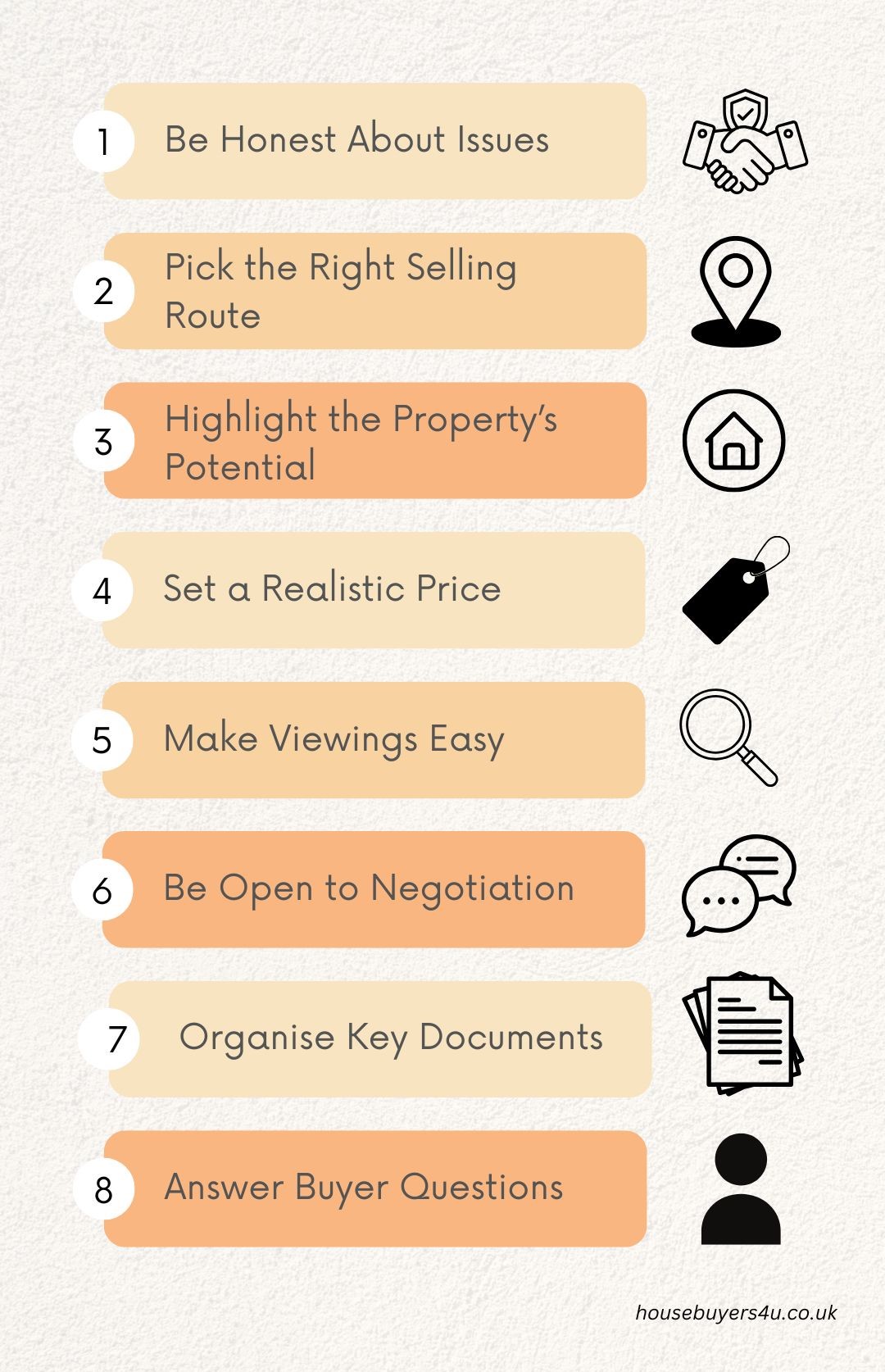
1) Be Honest About Issues: Disclose all known problems with the property to potential buyers. Transparency builds trust and reduces the risk of disputes later in the process.
Transparency is key when selling a property in poor condition. Issues like damp, outdated features, or structural problems are common. In fact, 14% of households in England live in homes that fail to meet the Decent Homes Standard, with 4% struggling with damp issues. Being upfront about these problems not only builds trust but helps attract the right buyers, such as investors or cash buyers, who see potential in such properties
2) Pick the Right Selling Route: Choose between an estate agent, auction, or selling directly. Auctions houses are great for attracting investors looking for renovation opportunities.
3) Highlight the Property’s Potential: Focus on the positives, like location, size, or potential for improvement, to appeal to buyers who see value beyond the current condition.
4) Set a Realistic Price: Price the property appropriately for its condition. Overpricing can scare off buyers, while a fair price attracts serious interest.
Consider the following cost-benefit analysis when deciding whether to make improvements before selling a house that needs work & setting your final asking price:
| Issue Type | Average Fix Cost | Potential Value Added |
|---|---|---|
| Cosmetic Damage | £500-£1,000 | £2,000-£3,000 |
| Damp Issues | £2,000-£4,000 | £5,000-£8,000 |
| Structural Problems | £10,000+ | £15,000-£25,000 |
| Outdated Kitchen | £5,000-£8,000 | £10,000-£15,000 |
| Garden Cleanup | £200-£500 | £1,000-£2,000 |
5) Make Viewings Easy: Keep the property clean and presentable, and be flexible with viewing times to encourage more interest from potential buyers.
6) Be Open to Negotiation: Be prepared to negotiate on price or terms, especially if you’re selling as-is. Flexibility can help close a deal faster.
7) Organise Key Documents: Gather surveys, reports, and any other documentation about the property’s condition. Having everything ready reassures buyers and speeds up the process.
8) Answer Buyer Questions: Be ready to address questions about the property’s history, condition, and potential repairs. Clear, honest answers help build buyer confidence.
Advice from our Property Expert Paul:
"I’ve worked with countless sellers who initially overvalued their homes, only to see them sit on the market with little interest. The truth is, buyers are savvy, they know what a home is worth, even one in poor condition.
My advice? Be realistic but strategic. Think of pricing as a way to invite offers rather than scare them off. Selling a property just slightly below market value can even generate a bidding war, ultimately selling above the asking price. That small adjustment made all the difference. Remember, setting a reasonable price is about understanding the market, your buyer, and your home’s potential."
Your Real Options for Selling a House in Poor Condition
There are a number of different types of house buyers who might want to purchase a run-down house or a house in poor condition. According to Skynews, only 7% of homes in England built after 2001 with many properties being older and requiring significant updates, making them ideal for buyers like developers and investors looking for renovation opportunities. These include:
Traditional Buyers
- Estate Agents: Often have investors or clients on their books who seek renovation projects.
- Private House Sale (FSBO): Individuals buying directly without an intermediary, often looking for a lower-cost entry point.
- Auction House: Auctions attract cash buyers, developers, and investors willing to take on properties needing significant work.
- Quick Sale Company: Companies specialising in purchasing properties quickly, regardless of condition, often at a discounted price.
Related Read: How much below market value to companies that buy houses offer?
Investors and Specialists
If you’re selling a run-down house, targeting buyers who see potential is key. This includes:
- House Flippers: Buyers looking to renovate and sell for a profit.
- Buy-to-Let Investors: Landlords interested in properties they can refurbish and rent out.
- Developers: Professionals seeking properties with potential for major renovations or redevelopment.
- Cash Buyers: Individuals or companies with ready cash, often seeking a quick, no-chain purchase.
Buyers like house flippers and developers specialise in selling a house that needs work by renovating properties and reselling them for profit. These buyers are ideal for homes that require substantial improvements but have strong potential for returns.
Below is a comparison table of typical offers, timeframes, and key benefits for each type of buyer, helping you evaluate which route best matches your priorities:
| Buyer Type | Typical Offer (% of Market Value) | Key Benefits |
|---|---|---|
| Cash House Buyers | 70-85% | Quick completion, no chain |
| Property Developers | 75-85% | Higher offers for development potential |
| Buy-to-Let Investors | 80-90% | More flexible on the condition |
| Auction Houses | 65-80% | Guaranteed sale if reserve met |
How Condition Affects Offers in Practice (Hb4u data)
Based on our internal enquiry and completion data:
| Property issue | Typical impact on offer |
|---|---|
| Cosmetic wear | Small reduction |
| Damp or outdated systems | Moderate reduction |
| Structural or major defects | Significant reduction |
| Realistic pricing | Faster sale outcomes |
From what we see in practice, buyers don’t just factor in the cost of repairs; they also price in risk, time, and uncertainty.
For example:
- A £10,000 repair job might reduce an offer by more than £10,000
- Properties with structural issues often attract fewer buyers, increasing negotiation pressure
- Unmortgageable homes tend to shift towards cash buyers, which changes pricing expectations entirely
How We Make Selling a House in Poor Condition Easy
Selling your home doesn’t have to be stressful. At House Buyers4u, we specialise in providing quick, hassle-free solutions for homeowners looking to sell their properties "as is," regardless of the condition. We’re here to make the process simple and straightforward for you.
Learn More About How to Sell Your House Fast in the UK
- Best Time of the Year to Sell Your House
- Should I Sell My House to Pay Off Debt?
- Selling Your House After Divorce
- How to Sell an Inherited Property Fast
- Sell House Due to Job Relocation
- Selling your House Due to Health Issues
- How Long Does It Take to Sell a House UK?
- How to Sell a House with Bad Tenants
- How to Sell your Tenanted Property
- How to Sell My Flat Quickly
- How to Sell Your House to an Investor Fast
- How to Sell your House Online
- Selling Your House Without an Estate Agent in the UK
- How to Sell your Empty House Fast in the UK
- Common Mistakes When Selling Your Home
- Selling your Non-Standard Construction House
- How to Stage a House for Sale
- Sell My House Fast for Market Value UK
- Selling your House Due to Financial Difficulties
- How Long Does It Take to Sell a House UK?
- What is Gazundering?
- Selling Your House Due to Relocation or Emigration?