
What is a TA6 Form? (How to Complete it Correctly FIRST TIME)

Updated: March 2026
A TA6 form is a key part of selling a property in the UK, used to disclose important information about your home to buyers. Completing it correctly is critical, as missing or inaccurate details are a common cause of delays, disputes, and even failed sales.
Key Takeaways:
- The TA6 form helps buyers understand exactly what they’re purchasing before exchange.
- Incomplete or incorrect answers are a common cause of delays and legal disputes.
- Being honest and thorough from the start can prevent renegotiation or claims later.
-
- What Is a TA6 Form?
- What is the TA6 Form Used For?
- What Does the TA6 Form Cover?
- How to Fill Out the TA6 Form Correctly
- What’s Changing? The TA6 Form Update (2025)
- What Happens If You Provide False or Incomplete Information?
- Sell Your Property Fast Without the Hassle of Conveyancing
- Frequently Asked Questions
What Is a TA6 Form?
A TA6 form (Seller’s Property Information Form) is a legal questionnaire completed by the seller during conveyancing. It provides buyers with detailed information about the property, including boundaries, disputes, alterations, and environmental risks.
What does a TA6 Form Look Like?
This is what a TA6 form looks like:
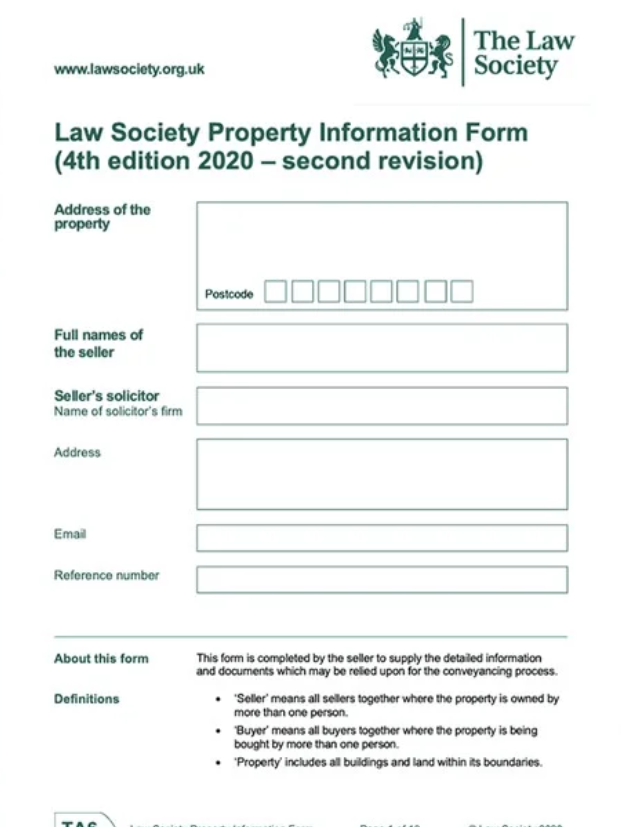
Source: lawsociety.org.uk
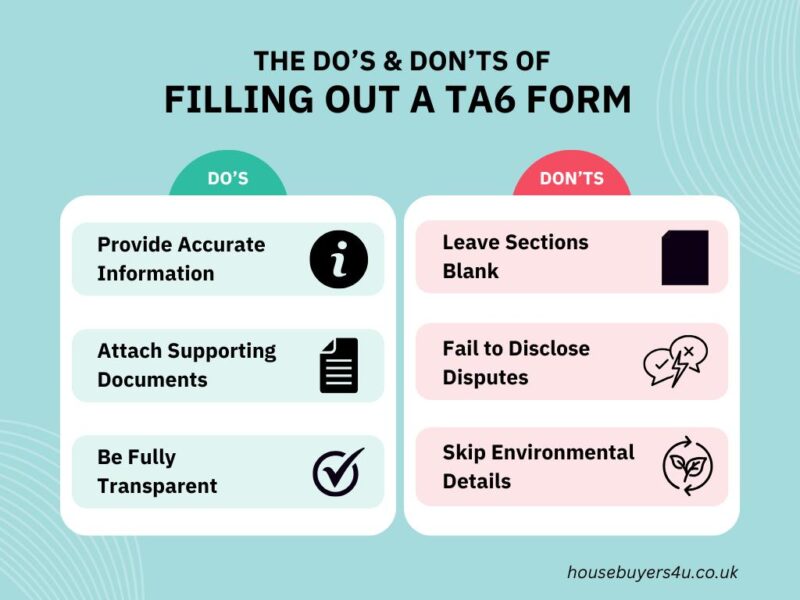
What’s Changing? The TA6 Form Update (2026)
The TA6 form has been updated by the Law Society, with a new 6th edition released in late 2025.
- The updated version is already in use by many solicitors
- From 30 March 2026, the new TA6 form becomes mandatory for Conveyancing Quality Scheme (CQS) firms
- Older versions (4th and 5th editions) are being phased out and withdrawn
The latest version has been redesigned to be clearer and easier to complete, following feedback that earlier updates were too complex.
For sellers, the key takeaway is simple:
You should expect to complete the new TA6 form in 2026, and it’s more important than ever to prepare your information early to avoid delays.
According to Law Gazette 20% of HM Land Registry applications require requisitions due to errors, causing delays of months. Common mistakes include incorrect details, mismatched names, and missing signatures - that's why it's very important to fill this in correctly to save time and hassle in the future.