How to Check if Your Quick Sale Company Legit? (4 Step Guide)
Updated: April 2026
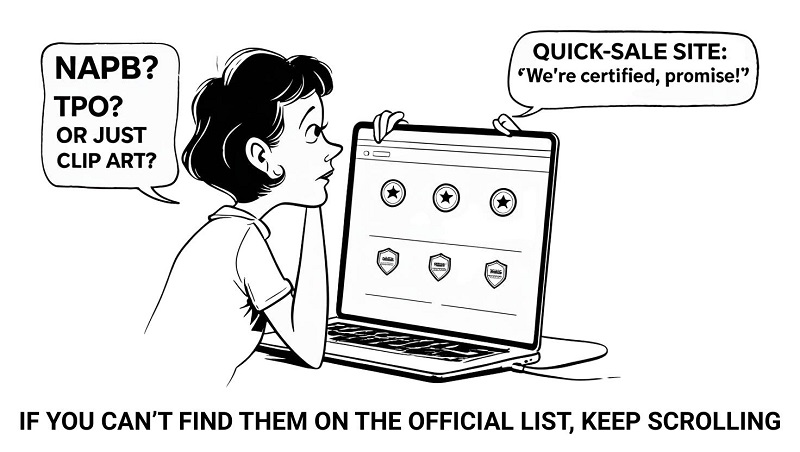
Not all quick-sale companies are trustworthy. To check if a house buying company is legitimate, you need to verify its memberships, confirm them independently, and look for clear signs of transparency. A few simple checks can protect you from delays, poor offers, or scams.
Key Takeaways:
- Always check membership with the National Association of Property Buyers and The Property Ombudsman.
- Don’t trust logos alone; verify memberships directly on official websites.
- If a company refuses to provide proof, treat it as a major warning sign.
How to Check if a House Buying Company Is Legitimate
To check if a house buying company is legitimate, verify its membership with recognised bodies like the National Association of Property Buyers (NAPB) and The Property Ombudsman (TPO), confirm these memberships on official websites, and request proof of accreditation directly from the company.
1) Step 1: Check Regulatory Bodies
Start by familiarising yourself with the key regulatory bodies that oversee quick-buy property companies. This knowledge is crucial for ensuring that you're engaging with a legitimate firm. In the UK, notable organisations include the National Association of Property Buyers (NAPB) and The Property Ombudsman (TPO). Both entities set standards and offer recourse in case of disputes, providing a layer of security for your transaction.
Understanding these organisations helps you verify that a company adheres to industry standards, enhancing your confidence in their services. This step is especially valuable for working-class homeowners aged 30 and over, who are often targeted by quick-sale marketing and may need reliable, quick solutions for selling their properties.
2) Check Company Affiliations
Carefully examine the company's website to confirm its affiliations with recognised regulatory bodies. A reputable sell house fast company will often display its credentials openly. Start with the "About Us" page, which typically outlines the company's history, mission, and any affiliations.
Remember to scroll down to the website’s footer, where companies commonly display the logos of associations like the National Association of Property Buyers (NAPB) and The Property Ombudsman (TPO).
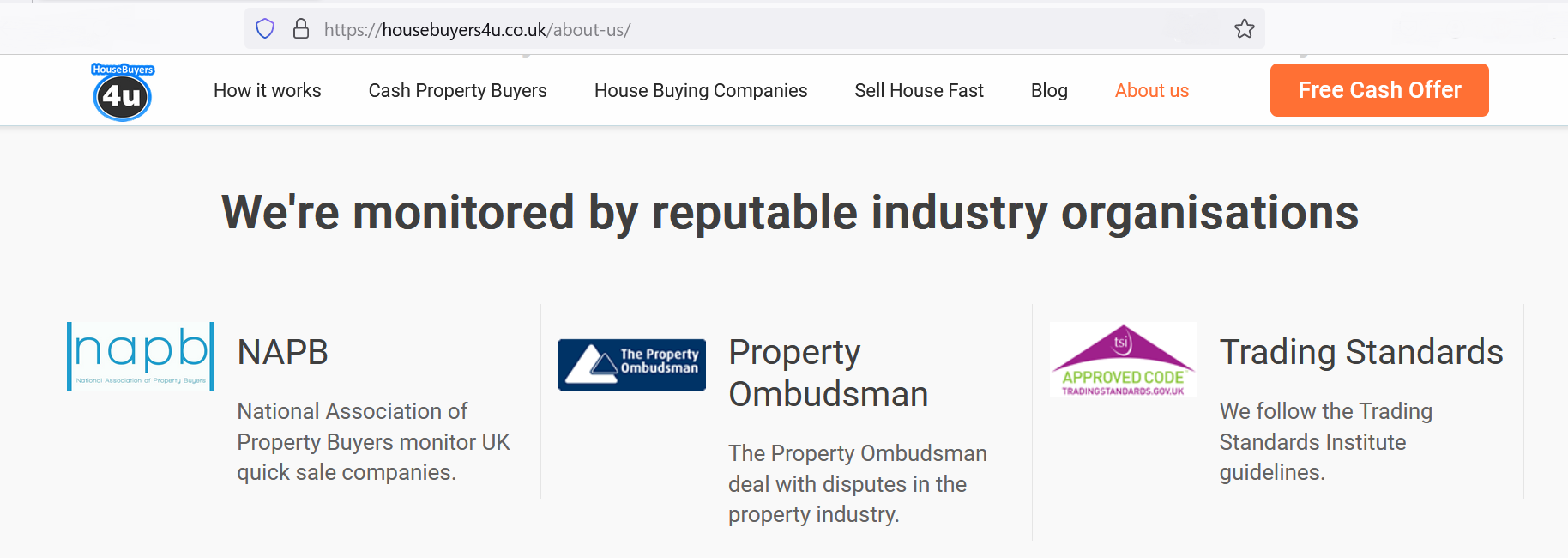
Verifying these affiliations is a critical step for homeowners, as it ensures that they're dealing with a firm that adheres to established standards of practice.
3) Step 3: Verify Membership Independently
Once you've identified potential affiliations on a company's website, the next step is to confirm these memberships independently. Visit the websites of regulatory bodies like the National Association of Property Buyers (NAPB) or The Property Ombudsman (TPO). These organisations typically offer a "Find a Member" feature, allowing you to search for the company in question.
Below is screenshot of where you can find this feature on the NAPB's website.
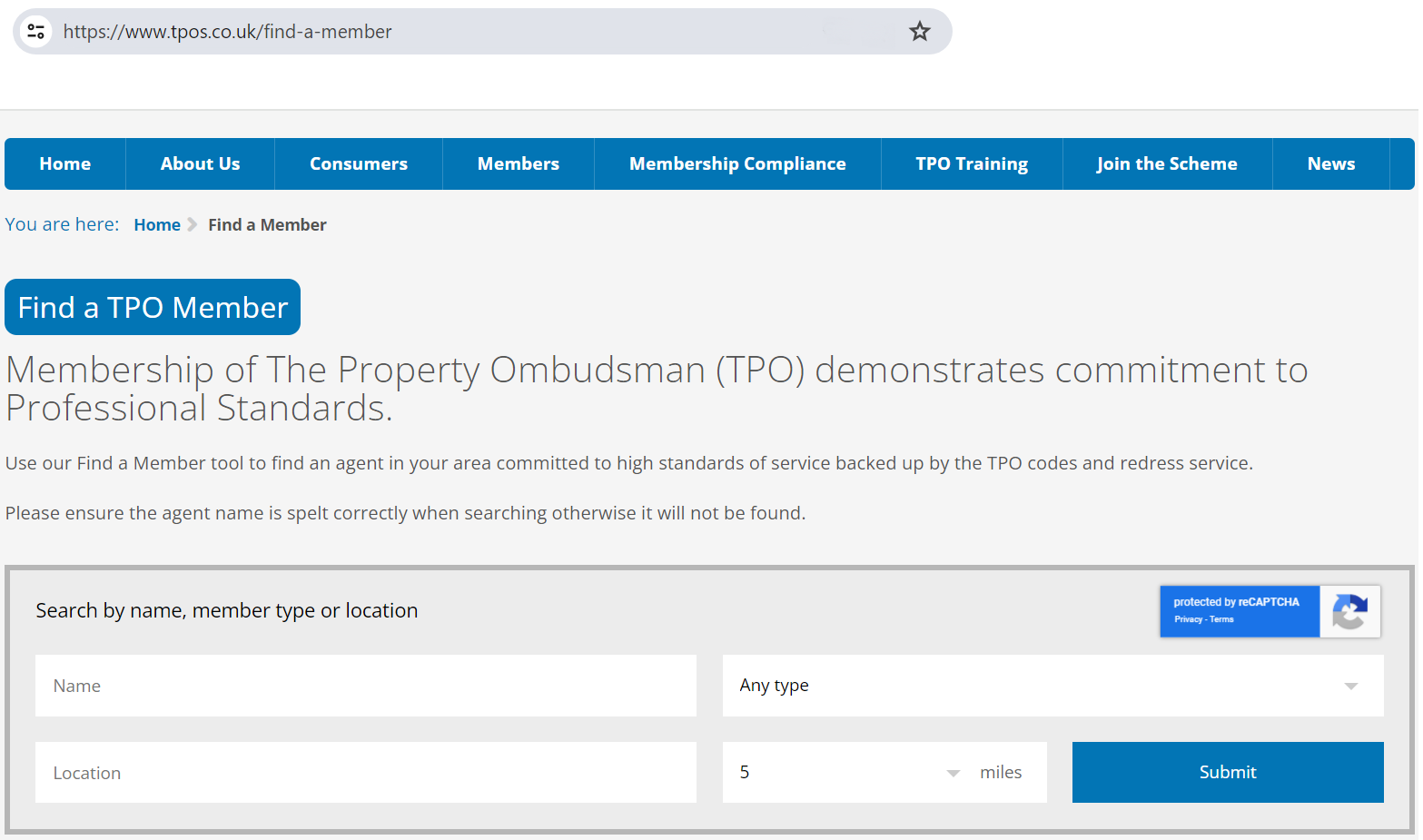
- Visit https://www.tpos.co.uk/
- Find the "find a member" page located on the middle of the homepage
- Type in the name of the organisation you are searching for on "find a member" page
This proactive step is particularly valuable for homeowners, ensuring that the quick-buy company you are considering is legitimately recognised and monitored by industry regulators.
Expert quote from our Property Expert Paul:
"Double-checking a company’s credentials takes a minute, but it can save you from serious problems. Always verify memberships on the regulator’s site, not just what’s shown on the company’s website."
4) Step 4: Request Proof of Accreditation
A legitimate company should have no issue providing proof.
Ask for:
- Membership certificate
- Membership number
- Confirmation of active status
If they hesitate, delay, or avoid answering, walk away.
Below is an example of an email template you might use to request this information.
Email Template Example:
Subject: Request for Membership Verification
Dear [Company Name],
I am currently considering your services for the sale of my property and was pleased to see your affiliation with [Name of Regulatory Body] as listed on your website. To proceed with confidence, I would appreciate if you could provide proof of this membership. Specifically, I would like to see:
A copy of your current membership certificate with [Name of Regulatory Body]
Your membership number for verification purposes
Any additional documentation that confirms your good standing with the organisationThank you for your cooperation, and I look forward to your prompt response.
Best regards,
[Your Name]
Requesting this proof is a crucial step for homeowners who are seeking assurance of a company's credibility before engaging in a potentially significant financial transaction. This action not only helps validate the company's claims but also establishes a baseline of trust necessary for any further dealings.
From working with sellers across the UK, the biggest issue isn’t always scams, it’s companies overstating credibility.
Some display logos or claims that aren’t fully accurate. The safest approach is always to verify everything yourself.
Bonus Tip: Beware of Red Flags
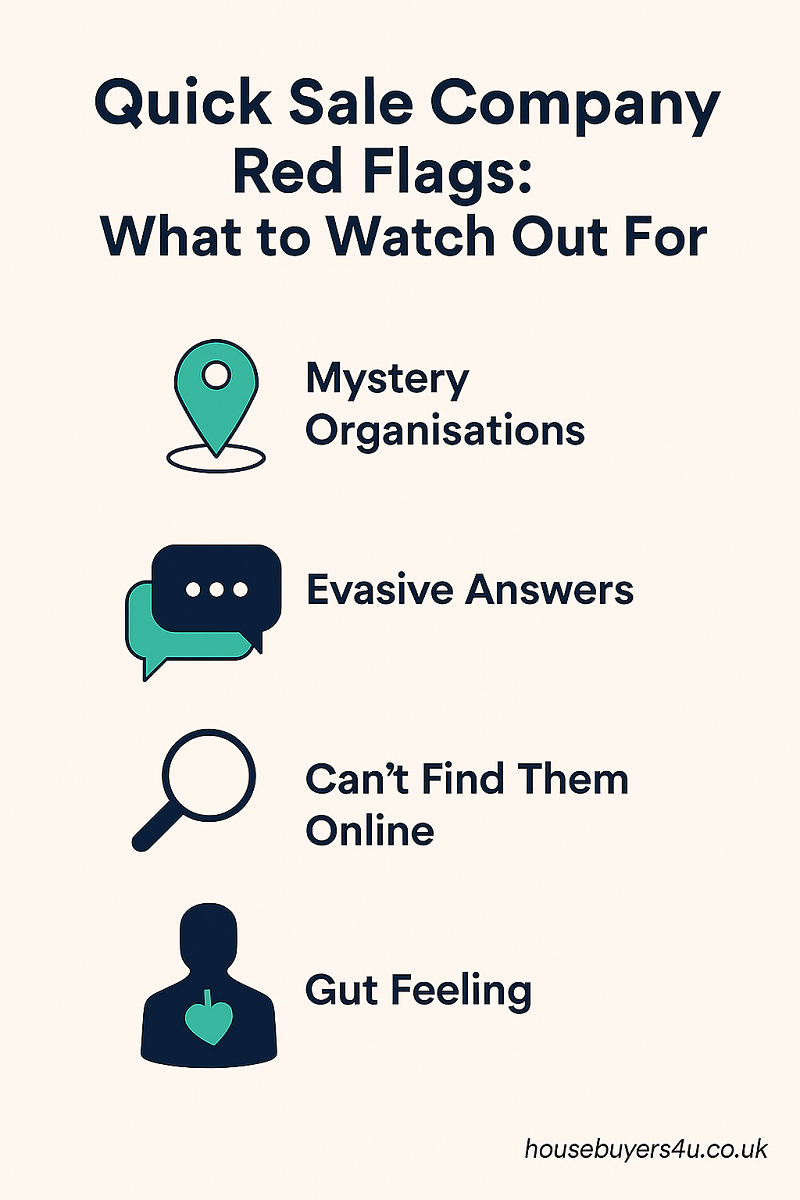
Unfortunately, not every company claiming to be "accredited" plays by the rules. Keep these warning signs in mind:
-
Mystery Organisations: If a company boasts about belonging to an organisation you've never heard of, be cautious. It might be something they made up to sound impressive.
-
Evasive Answers: When you ask about memberships, do they give vague replies or try to change the subject? Reputable companies have nothing to hide.
-
Can't Find Them Online: Always double-check any claimed affiliations on the websites of major organisations (like the NAPB or TPO). If the company doesn't appear, dig deeper and check their online reviews.
-
Gut Feeling: Sometimes, something just feels off. If a company gives you a bad vibe, don't be afraid to walk away. There are numerous legitimate quick-buy companies available.
Remember, in 2025, around 23.8% of UK property sales fell through before completion roughly 1 in 4 transactions according to data from TwentyCi. This highlights how common failed sales are and why it’s crucial to deal with a reliable, transparent company from the start.
Lucys Near Miss Experience:
Lucy thought she was dealing with a reputable quick-buy company. They claimed to be members of a prestigious-sounding organisation, but when she searched for it online, she couldn't find it anywhere. Further investigation revealed that the company address listed on their website belonged to a completely different business! Luckily, with our help and additional due diligence on Lucys side, she avoided a potentially bad situation.
How to check if your quick sale company is genuine