What Does POA Mean When Buying a House? (UK Guide)
Updated: March 2026
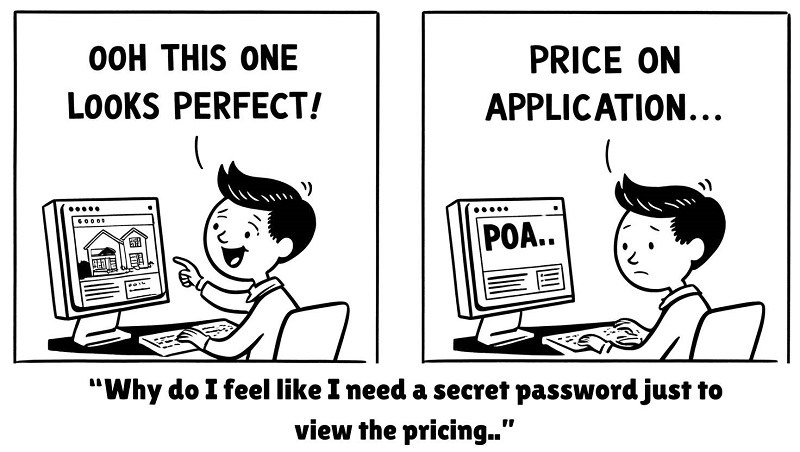
POA (Price on Application) means the property price isn’t shown publicly, and you’ll need to contact the estate agent to find out. For buyers, this usually adds friction, as you can’t quickly compare it with other properties or filter it by budget.
3 Key Takeaways:
- POA means no price is shown, so you must contact the agent to get the price.
- It’s often used for high-value or unusual properties, but many buyers skip these listings.
- In most cases, properties with clear asking prices attract more serious interest.
What Does POA Mean in Property?
POA stands for “Price on Application.” It means the seller or estate agent has chosen not to display the property’s asking price publicly. Instead, interested buyers must enquire directly to receive the price.
POA in Sales vs Rentals
-
In sales listings, POA is typically used for high-value or unique properties where sellers want privacy or flexibility on price.
-
In rental listings, POA may be used for new developments or high-demand areas, allowing landlords to test the market and gauge tenant interest before setting a final rent.
When Is a POA Usually Used?
- Luxury or high-end homes
- Celebrity or high-profile sellers seeking privacy
- Quirky or one-of-a-kind properties with no obvious price comparables
- Sellers testing the market or undecided on asking price
In most cases, POA is designed to create exclusivity, but it can also be off-putting to buyers who want transparency upfront.
Related Read: What does under offer mean on a house?
Is POA a Red Flag for Buyers?
Not always, but in many cases it can be a warning sign.
While POA (Price on Application) is sometimes used for legitimate reasons, such as high-value or unique properties, it often adds unnecessary friction for buyers. If a price is not shown, many buyers assume one of two things: the property is overpriced, or the seller is not fully committed to a realistic valuation.
POA vs Standard Property Listings
| Factor | POA Listing | Standard Listing |
|---|---|---|
| Price visibility | Hidden | Clearly shown |
| Buyer trust | Lower | Higher |
| Ease of comparison | Difficult | Easy |
| Enquiry rate | Often lower | Typically higher |
For most buyers, quickly assessing affordability and comparing properties is essential. When that information is missing, many will simply move on rather than chase the agent.
In practice, this means POA listings can reduce serious interest, especially in the mainstream market where buyers expect transparency from the start.
Why Do Estate Agents Use POA?
Estate agents use POA (Price on Application) for several reasons, but most come down to either protecting the seller’s privacy or gaining more control over buyer interest and pricing.
Common Reasons Agents Use POA:
-
Privacy for the seller: High-profile individuals or sellers who value discretion may not want the price publicly visible — especially if they’re concerned about neighbours, press coverage, or family seeing the listing.
-
Testing market demand: When a property is hard to price (like a niche or one-off home), agents may use POA to see how much interest it gets before committing to a fixed figure.
-
No price agreement with the seller: If the agent and vendor can’t agree on an asking price, POA lets them list the property without being tied to a number straight away.
-
Hiding price reductions: Listing as POA after a price drop stops buyers from seeing the property’s previous price history, avoiding the impression that the seller is desperate or open to low offers.
-
Collecting buyer details: Since buyers must contact the agent to get the price, it gives the agent an opportunity to collect names, phone numbers, and emails for future marketing.
Related Read: What does guide price mean when buying a house?
Expert advice from our property expert Paul Gibbens:
"We’ve seen POA used to great effect in rare cases, but in today’s market, it often causes more confusion than interest. Buyers want transparency, and withholding the price can put them off early.
At Housebuyers4u, our valuations team regularly speak with sellers who’ve listed as POA and struggled to generate serious enquiries. In most situations, a clear asking price backed by solid comparables attracts more genuine buyers and leads to a smoother sale."
How to Find Out the Price of a POA Property
While POA listings are relatively rare, they still exist. For instance, as of a 2022 report, Rightmove had approximately 3,000 live listings with POA, representing about 0.3% of properties on the website. This indicates that while uncommon, buyers may still encounter POA properties and should be prepared to navigate these listings effectively
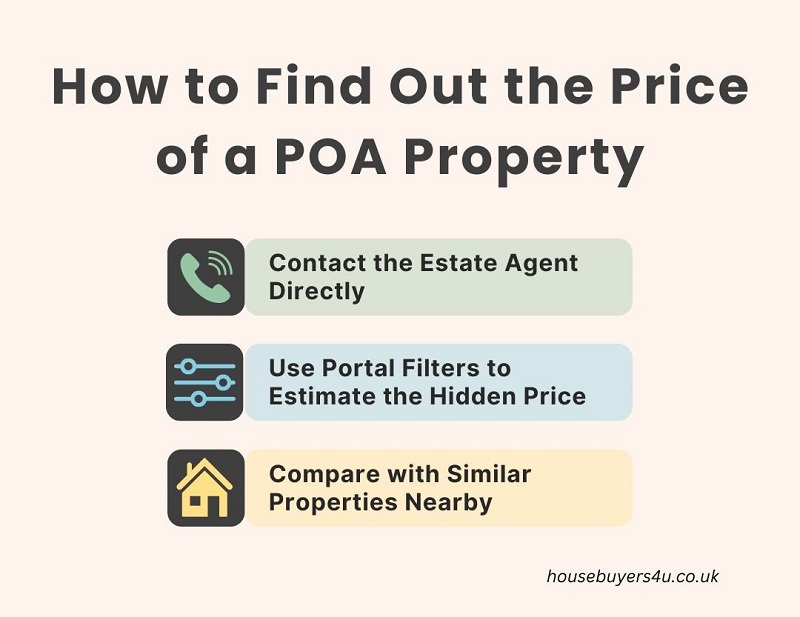
If you come across a property listed as POA (Price on Application), there are a few ways you can still get a good idea of what it’s actually worth without wasting time chasing agents for details.
1) Contact the Estate Agent Directly
The most obvious route is to call or email the estate agent. They’ll usually give you the asking price over the phone. However, be aware that doing this puts you on their mailing list and if the property is overpriced, you may have wasted your time.
2) Use Portal Filters to Estimate the Hidden Price
Property portals like Rightmove or Zoopla require agents to enter a price, even if it's hidden behind POA. The listing will still show up in price-based filters, so try adjusting your filters slightly and look for where the POA property appears among others, it’ll give you a rough estimate.
3) Compare with Similar Properties Nearby
Scroll through similar listings in the same postcode or area. Check for properties with the same number of bedrooms, size, and features. If the POA home is sitting between two £400,000 listings, it’s likely in the same ballpark.
These methods won't give you an exact figure, but they can help you avoid chasing unrealistic listings or prepare you for negotiation if the property is a serious contender.
Our advice? Use portal filters and comparables first, they’ll often get you 80% of the way there. If it still seems promising, then contact the agent. But always be cautious: if a price isn’t shown upfront, it’s often because it’s either overpriced or the seller isn’t fully committed. Transparency almost always attracts more serious interest.
When Does POA Actually Make Sense?
POA can work in a small number of situations where pricing is less straightforward or privacy is important.
It tends to make sense for:
- Luxury homes where pricing can vary widely depending on buyer profile and negotiation
- Unique or one-of-a-kind properties with no clear comparable sales
- Privacy-sensitive sales where the seller does not want the price publicly visible
That said, these are the exception, not the rule.
For most UK homes under £1M, POA is rarely needed. Buyers expect transparency, and hiding the price often creates more friction than interest.
Pros and Cons of POA
| Pros | Cons |
|---|---|
| Protects seller privacy | Frustrates buyers |
| Allows flexible pricing | Can hide overpricing |
| Works for niche properties | Reduces enquiries |
Find out how much we can Offer for your House