
What Is a TR1 Form? (And Why Mistakes Can Delay Your Sale)
Key Takeaways:
- The TR1 form is the final legal step in transferring property ownership.
- Even small mistakes can lead to months of delay with HM Land Registry.
- Most buyers and sellers use a solicitor to ensure it’s completed correctly.
What Is a TR1 Form?
A TR1 form (Transfer of Whole of Registered Title) is a legal document used to transfer full ownership of a property in the UK. It records the buyer, seller, price, and ownership details, and is submitted to HM Land Registry to update the title.
What Does a TR1 Form Look Like?
This is what a TR1 form looks like:
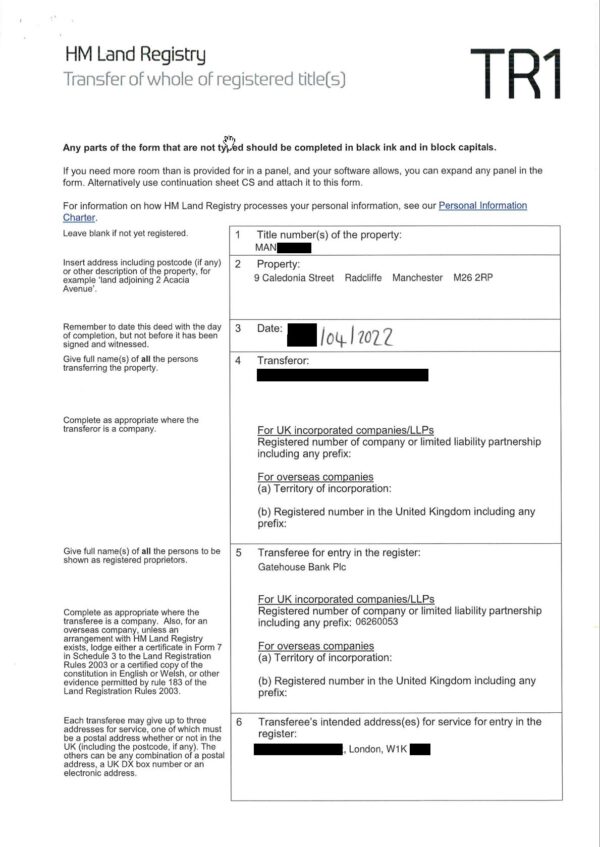
Source: landtaxadvice.co.uk
What Is a TR1 Form Used For?
A TR1 form is used to legally transfer full ownership of a property in the UK. It is required in several scenarios where ownership changes hands, ensuring the transfer is properly documented and legally recognised by HM Land Registry.
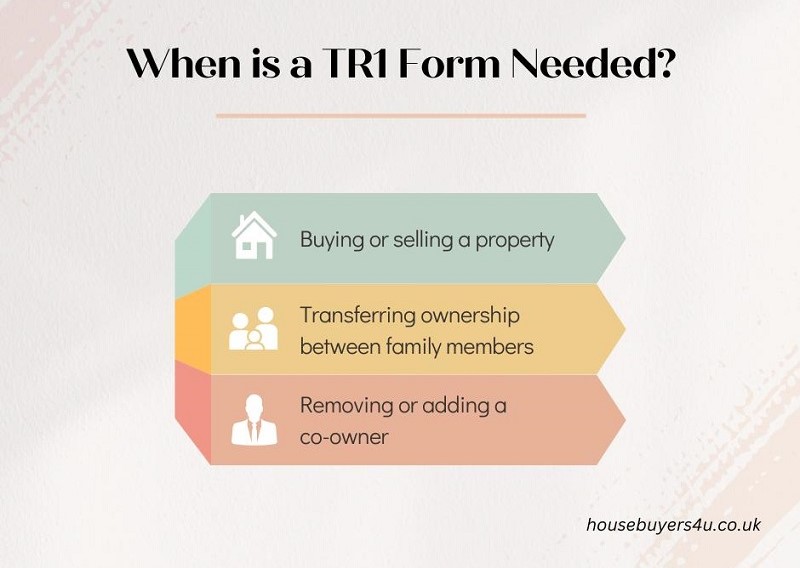
When Is a TR1 Form Needed?
You will need a TR1 form in the following situations:
- Buying or selling a property – The form is completed as part of the conveyancing process to officially transfer ownership from the seller to the buyer.
- Transferring ownership between family members – Used in cases of inheritance or gifting a property.
- Removing or adding a co-owner – Common in divorce settlements or when a joint owner is added or removed from the title.
Once the form is signed, witnessed, and submitted, Land Registry updates the official records, confirming the new legal owner of the property.
Related Read: The conveyancing process for homeowners selling a house
What Is a TR1 Form in Conveyancing?
The TR1 form is completed towards the end of the conveyancing process and is the legal step that transfers ownership from the seller to the buyer.
Key Steps in the Process
- Drafting and signing – The conveyancer prepares the TR1 form, and both buyer and seller sign it once all details are confirmed
- Witnessing – Each signature must be independently witnessed
- Submission to HM Land Registry – The form is submitted alongside supporting documents, such as Stamp Duty confirmation
- Ownership update – HM Land Registry updates the title register, officially recording the new owner
This final step ensures the transfer is legally recognised and prevents future ownership disputes.
At Housebuyers4u, our conveyancing team has helped thousands of homeowners navigate the TR1 form process efficiently. Paul, our property expert, shares this key advice:
"Many homeowners don’t realise how crucial accuracy is when filling out a TR1 form. A simple mistake like incorrect buyer details or missing signatures—can cause serious delays with HM Land Registry.
From our experience, working with a conveyancer who knows the process inside out ensures the form is submitted correctly the first time, preventing costly setbacks."
According to Law Gazette 20% of HM Land Registry applications require requisitions due to errors, causing delays of months. Common mistakes include incorrect details, mismatched names, and missing signatures - that's why it's very important to fill this in correctly to save time and hassle in the future.