What are Title Deeds & What do they Look Like? (UK Explained)
Updated: April 2026
House deeds are the legal proof of property ownership in the UK, but how they exist today depends on whether your property is registered digitally or still held in older paper form. Understanding what house deeds are, where they’re stored, and what they look like can help you avoid delays when buying or selling.
Key Takeaways
- House deeds prove ownership and include key property details.
- Most UK homes now use digital Land Registry records instead of paper deeds.
- You can access copies online, even if original documents are lost.
What are House Deeds?
House deeds are legal documents that prove ownership of a property. They include details such as the owner’s name, property boundaries, rights of way, and any mortgages or restrictions. In the UK, most deeds are now held digitally by HM Land Registry rather than as physical paper documents.
What Do House Deeds Look Like?
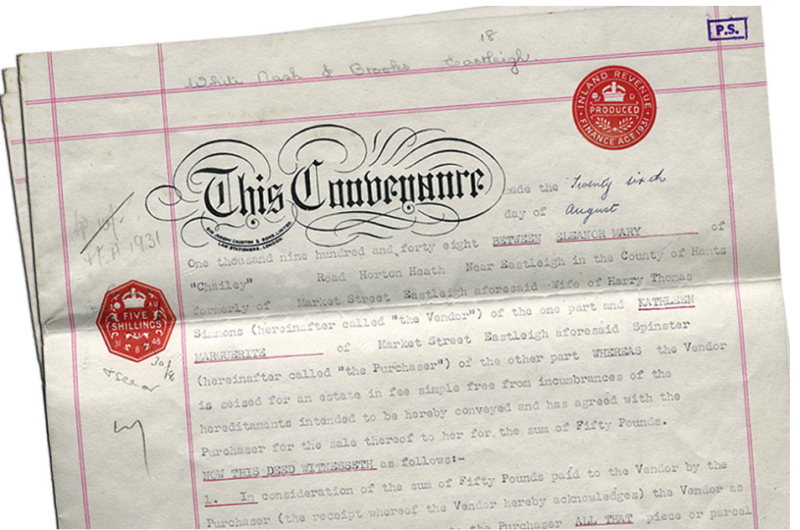
This is a photo of a real house deed document
The appearance of house deeds depends on when the property was purchased and whether it has been registered with the Land Registry. Older properties may still have physical paper deeds, while most modern homes have digital title records stored securely online.
Physical House Deeds (Older Properties)
If your property was purchased before digital registration became standard, you may have paper title deeds. These are often bundles of documents that include:
- Names of past and current owners
- Detailed property descriptions and boundaries
- Mortgage agreements, leases, or historic contracts
Paper deeds can be handwritten, typed, or even on parchment paper for very old properties. They may also include stamps, seals, and signatures to verify legal transactions.
Digital House Deeds (Modern Properties)
Most properties in the UK are now registered with the Land Registry.
Instead of paper deeds, you’ll have:
- A Title Register (ownership details)
- A Title Plan (map of the property)
These are stored securely online and are the official legal proof of ownership.
Do You Need Physical Deeds?
In most cases, no.
If your property is registered with the Land Registry:
- Paper deeds are not required
- Digital records are legally valid
- Lost deeds are usually not an issue
The only time paper deeds matter is if a property is unregistered, which is now rare.
Where are my House Deeds Kept?
If you’re looking for your deeds, check these places:
- Land Registry: First place to check for digital records
- Solicitor or conveyancer: May hold older copies
- Mortgage lender: Sometimes holds deeds as security
Even if you have paper deeds, always confirm whether the property is digitally registered.
Important Tip: Even with physical deeds, double-check if they've been digitally registered with the Land Registry. This gives you the most updated and secure proof of ownership.
Related read: Everything you need to know about conveyancing
Expert advice from our property expert Paul Gibbens
"Most homeowners worry about losing their house deeds, but in reality, digital Land Registry records are what matter. The real issues tend to come from unregistered properties or outdated ownership details, which can delay a sale if not sorted early"
How to Get a Copy of Your Property Deeds in the UK
Ready to get your hands on your house deeds? Here's a step-by-step guide on how to do it:
1. Start with the Land Registry
You can search for your property online and download official copies for a small fee.
2. Check with Your Conveyancer
They may still hold copies, especially for older purchases.
3. Ask a Mortgage Lender
If you have a mortgage, they may hold documents as security.
How to Update or Change House Deeds
Life happens, and sometimes those changes affect the ownership of your property. Here's what to know about updating your house deeds in the UK:
When Do You Need to Update Deeds?
- Death of an Owner: Updating the deeds becomes part of the probate process.
- Gifting Property (or Part of It): The Land Registry needs to record the transfer of ownership.
- Divorce or Separation: If you jointly own property, any changes to ownership need to be reflected in the deeds.
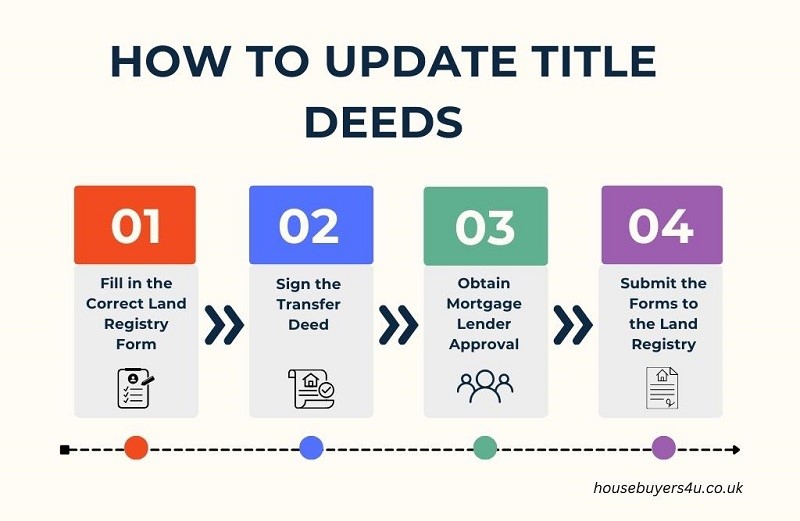
How to Update Title Deeds (Step by Step)
-
Fill in the Correct Land Registry Form
- AP1 Form – If updating details on a registered property (e.g., changing ownership due to inheritance or divorce).
- TR1 Form – If transferring full ownership to someone else.
- TP1 Form – If transferring part of the property (e.g., gifting a share).
- ID1 Form – Required for identity verification if you’re not using a solicitor.
-
Sign the Transfer Deed
- All involved parties (current and new owners) must sign the TR1 or TP1 form before submitting it.
-
Obtain Mortgage Lender Approval (If Applicable)
- If there’s a mortgage on the property, you’ll need the lender’s written consent before making ownership changes.
-
Submit the Forms to the Land Registry
- Send the completed forms along with:
- Any required supporting documents (e.g., probate documents, divorce settlement paperwork).
- The applicable Land Registry fee (varies based on property value).
- Send the completed forms along with:
Additional Notes:
-
- If updating contact details or correcting minor errors, you may only need a COV (Change of Name or Address) form instead of an ownership transfer.
- If the update is due to death, you’ll also need a death certificate and probate documents.
Can I Remove a Name from the Property Deeds?
Yes, you can remove a name from property deeds if ownership changes due to divorce, separation, inheritance, or other legal reasons. This process involves submitting a TR1 or TP1 form to the Land Registry, along with an AP1 form if the property is registered. If there’s a mortgage, you’ll also need lender approval before removing a name. It’s recommended to seek legal advice to ensure the transfer is processed correctly and does not affect your financial or legal standing.
How We Helped a Homeowner Going Through Divorce Sell Fast & Change Title Deeds
We recently assisted a client whose divorce settlement involved updating their house deeds. The Land Registry process was straightforward, but ensuring correct legal wording on the transfer documents was crucial for protecting everyone's interests.
You can read the full story here: Birmingham Divorce Resolution
What Happens if I Lose Title Deeds?
Losing your house deeds may seem like a major issue, but in most cases, it’s easily resolved. If your property is registered with the Land Registry, you don’t need the original deeds your ownership is already securely recorded. However, if your property isn’t registered, you’ll need to take steps to prove ownership.
How to Recover Lost Title Deeds
- Check the Land Registry: Search for your property on the Land Registry website (£3-£7 fee). If it’s registered, your ownership details are already recorded, and you can request official copies.
- Prove Ownership if Unregistered: If your property isn’t registered, you may need old mortgage documents, conveyancing records, or a solicitor’s statement to prove ownership.
- Apply for Possessory Title: If no official deeds exist, you can apply for Possessory Title, which acts as proof of ownership. After 12 years without dispute, this can be upgraded to Absolute Title.
- Consider Indemnity Insurance: If there’s uncertainty over ownership, indemnity insurance can provide financial protection against future claims.
If you’re unsure, a solicitor or conveyancer can guide you through the process to ensure your property rights are fully protected.
Need to Sell a Property Without the Hassle of House Deeds?
If you're dealing with lost house deeds, ownership complications, or delays in updating title records, selling your property can feel overwhelming. At Housebuyers4u, we specialise in buying properties quickly and hassle-free, even if you’re missing key documents or need to transfer ownership fast.
- Sell in as little as 7 days – No delays, no uncertainty.
- We handle the legal process – No need to worry about missing paperwork.
- Guaranteed sale, no agent fees – A stress-free way to move forward.
Sell Your House Fast with Housebuyers4u today, get a free, no-obligation cash offer and let us take care of the details so you can sell your home without the hassle.