Subsidence: Signs, Cracks & How to Sell a House With Subsidence
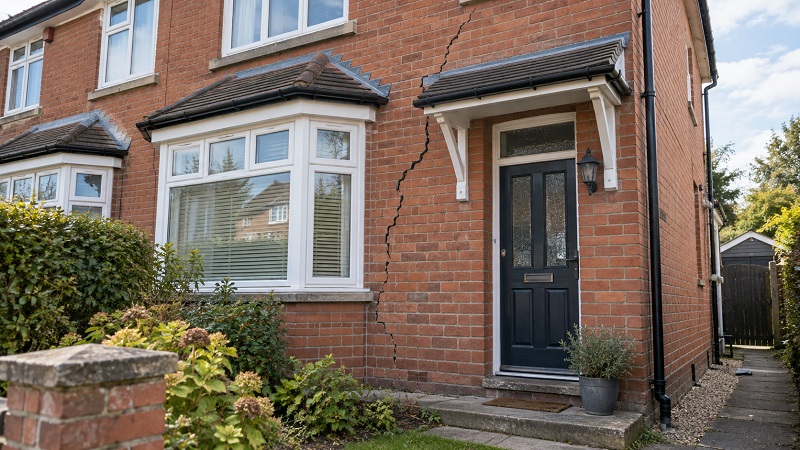
Subsidence happens when the ground beneath a property moves downwards and causes the foundations to sink. The first signs are often new or widening cracks, particularly around doors and windows, but not every crack means your house has subsidence.
3 Key Takeaways:
- Subsidence cracks are often diagonal, sudden and wider at one end, particularly around doors and windows.
- Minor cracks under around 3mm are common and do not automatically mean a house has subsidence.
- You can sell a house with subsidence, but establishing the cause and keeping clear evidence of investigations or repairs can make the sale easier.
-
- What Is House Subsidence?
- What Are the First Signs of Subsidence?
- What Should You Do If You Spot Signs of Subsidence?
- Can You Sell a House With Subsidence?
- How to Sell a House With Subsidence
- What We See When Sellers Have Subsidence Concerns
- Can You Sell a House With Active Subsidence?
- Frequently Asked Questions
What Is House Subsidence?
House subsidence is the downward movement of a building's foundations caused by changes in the ground supporting them.
This is different from normal settlement, where a building adjusts under its own weight, particularly when it is relatively new.
Common causes of subsidence include:
- Clay soil shrinking during prolonged dry weather
- Trees and large shrubs drawing moisture from shrinkable soil
- Leaking drains or water mains washing away or softening the ground
- Historic mining or quarrying
- Changes in local ground conditions
What Do Subsidence Cracks Look Like?
Subsidence cracks are usually more concerning when they are new, continue to grow or appear alongside other signs of movement.
Typical characteristics include:
- Diagonal cracks
- Cracks wider at the top than at the bottom
- Cracks appearing around doors and windows
- Cracks visible in both internal plaster and external brickwork
- Cracks appearing suddenly after prolonged dry weather
- Cracks that continue to widen over time
Subsidence Cracks vs Minor Cracks
| Crack or symptom | More likely minor movement | More concerning for subsidence |
|---|---|---|
| Width | Hairline to around 3mm | More than around 3mm or increasing |
| Shape | Fairly uniform | Diagonal or wider at one end |
| Location | Plaster joints, ceilings or recently decorated areas | Around doors, windows or through external brickwork |
| Change over time | Remains stable | Continues to grow |
| Other symptoms | None | Sticking doors, distorted frames or sloping floors |
| Timing | After plastering or normal settlement | Appears suddenly, particularly after dry weather |
What Are the First Signs of Subsidence?
The first signs of subsidence are usually changes that were not there previously.
Look out for:
- New or widening cracks
- Diagonal cracks around doors or windows
- Doors or windows suddenly sticking
- Wallpaper tearing or crinkling without damp
- Floors beginning to slope or dip
- External brickwork cracking in the same area as internal walls
One isolated hairline crack is very different from several symptoms developing together.
What Are the Early Internal Signs of Subsidence?
Internal signs of subsidence can be easier to notice because you see the inside of your house every day.
Pay particular attention to:
- Fresh diagonal cracks in plaster
- Cracks spreading from the corners of windows or doors
- Previously closing doors beginning to catch
- Window frames becoming difficult to open
- Wallpaper tearing without obvious moisture
- Floors developing a noticeable slope
If you find an early internal sign of subsidence, photograph it and note the date rather than immediately filling or painting over it.
A surveyor may need to establish whether the crack is moving. In some cases, monitoring may be needed before the cause becomes clear.
What Are Minor Subsidence Cracks?
The phrase "minor subsidence cracks" can be misleading, as a small crack does not necessarily indicate minor subsidence.
Fine cracks are extremely common in UK homes and can be caused by:
- Normal thermal movement
- New plaster drying
- A new building settling
- Extensions settling
- small changes where different building materials meet
If a crack is widening, keeps recurring after repair, appears suddenly, or is accompanied by other movement, it should be investigated rather than repeatedly filled.
Are There Signs of Subsidence in the Garden?
The garden can show that ground conditions around your property are changing, but garden symptoms alone cannot diagnose house subsidence.
Things worth noticing include:
- Heavily cracked clay soil during prolonged dry weather
- Large trees or shrubs close to the building
- Evidence of leaking underground drainage
- Local history of mining or quarrying
- changes in ground level close to the property
Clay soils absorb water and swell when wet, then shrink as they dry. The same shrink-swell process that produces cracked garden soil during dry periods can affect foundations where susceptible clay is present.
A dry, cracked lawn does not mean your house is subsiding. It shows that the soil is changing and should be considered alongside symptoms on the building itself.
Why Is Subsidence Becoming More Important?
Subsidence is not a niche property issue.
British Geological Survey estimates that shrink-swell ground movement has cost the British economy around £3 billion over the past decade.
Research published in 2026 also reported:
- £153 million of UK subsidence-related insurance claims in the first six months of 2025
- more than 1.8 million British properties could be highly or extremely susceptible to clay shrink-swell by 2070 under a medium emissions scenario
- this could rise to more than 4.2 million properties under a high emissions scenario
- London, particularly northern and central boroughs, and parts of Kent are among the most susceptible areas
These figures measure or project susceptibility and insurance impact. They do not mean every property in these locations will suffer subsidence.
Related Read: Signs of damp to watch out for
What Should You Do If You Spot Signs of Subsidence?
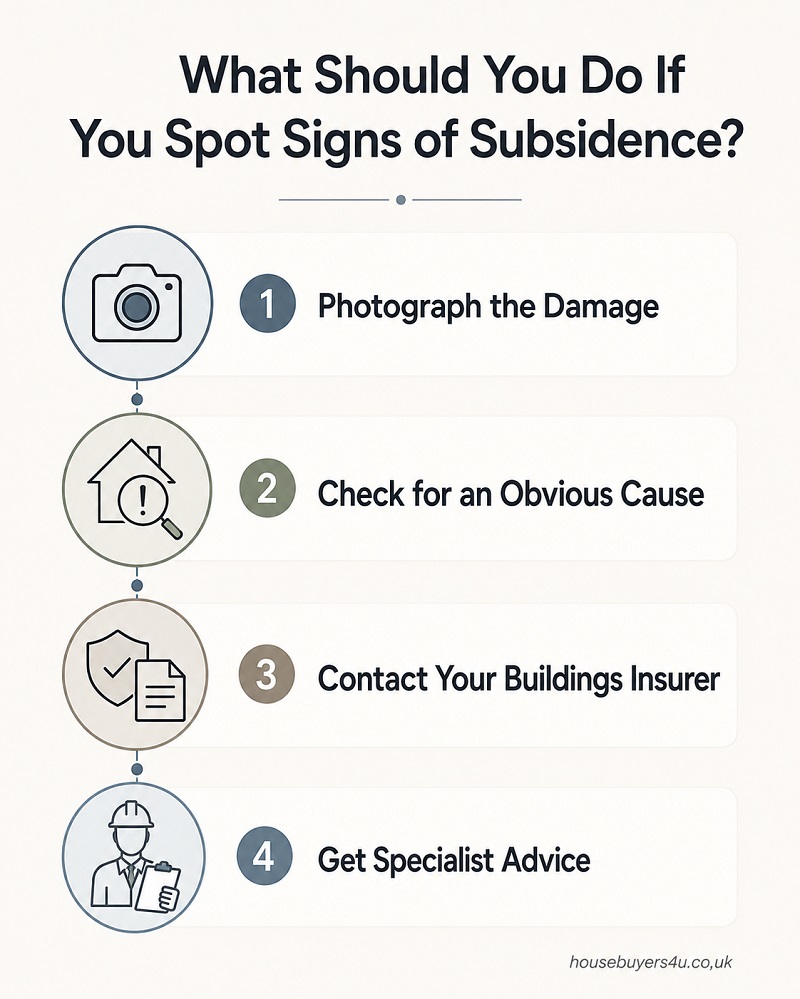
1. Photograph the Damage
Take clear photographs and record the date.
If possible, measure the widest point of the crack so you can see whether it changes.
2. Check for an Obvious Cause
Look for:
- leaking drains
- damaged gutters or water pipes
- nearby mature trees
- recent building work
- a history of mining in the area
Do not remove a large tree simply because it is close to the house. Changing vegetation can alter soil moisture, so professional advice may be needed.
3. Contact Your Buildings Insurer
If you genuinely suspect active subsidence, contact your buildings insurer before arranging major structural work.
The insurer may appoint a structural specialist or engineer to assess the property and identify the cause.
4. Get Specialist Advice
Depending on the problem, this may involve:
- A chartered building surveyor
- Structural engineer
- Drainage specialist
- Arboricultural specialist
- Geotechnical engineer
The objective is to find the cause before deciding on the repair.
Can You Sell a House With Subsidence?
Yes. A house with current or historic subsidence can still be sold.
The bigger question is whether the movement is:
- Suspected but undiagnosed
- Currently active
- Being monitored
- Repaired and stable
- Historic with complete supporting documentation
Those situations create very different levels of uncertainty for a buyer.
A repaired property with engineering reports, insurance records and evidence that movement has stopped is easier for a buyer to assess than a house with unexplained cracks and no investigation.
How to Sell a House With Subsidence
1. Establish What You Are Actually Dealing With
Do not market every crack as subsidence, but do not assume serious movement is cosmetic either.
Get enough information to distinguish normal cracking from a genuine structural issue.
2. Gather the Property History
Keep together:
- Surveyor or engineer reports
- Crack-monitoring records
- Insurance claim documents
- Drainage reports
- Tree reports
- Invoices for remedial work
- Underpinning specifications, if relevant
- Guarantees or completion records
This reduces uncertainty for the buyer.
3. Be Clear About the Condition
Give your conveyancer accurate information about known subsidence, investigations, insurance claims and repairs so they can advise you on what needs to be disclosed during the sale.
Trying to make cracks disappear cosmetically does not solve the underlying problem and may create a much bigger issue later if a surveyor identifies movement.
4. Price the Property Based on Its Actual Condition
Do not automatically assume a house with historic subsidence is worth a fixed percentage less.
The effect on value depends on:
- Whether movement is active
- Severity of the damage
- Cost of repair
- Quality of previous remediation
- Insurance availability
- Mortgageability
- Location
- Local buyer demand
5. Compare Your Sale Routes
| Sale route | Potential advantage | Potential drawback |
|---|---|---|
| Repair then sell traditionally | May attract the widest buyer pool | Repair and monitoring can take time |
| Sell as-is through an estate agent | Avoids paying for repairs upfront | Buyers may renegotiate after survey or struggle with finance |
| Sell directly to a cash buyer | Removes mortgage and chain dependency | Cash offer will normally be below full market value |
What We See When Sellers Have Subsidence Concerns
From the properties our team reviews, the hardest situations are often not the houses with a known repair cost. They are the ones where nobody yet knows whether the crack is cosmetic, historic or evidence of continuing movement.
That uncertainty affects how confidently a buyer can price the property.
| Situation | What usually helps |
|---|---|
| Small stable crack with no other symptoms | Clear photographs and professional reassurance where needed |
| Historic subsidence already repaired | Reports, invoices, insurance records and evidence of stability |
| Ongoing insurance claim | Clear claim status and expected repair process |
| Suspected drainage issue | Drain survey and repair information |
| Tree-related movement | Arboricultural and structural advice |
| Active unexplained movement | Professional diagnosis before cosmetic repair |
| Seller cannot wait for lengthy monitoring | Compare an as-is sale with the time and cost of investigation |
We would not recommend spending thousands on structural repairs before you know what is actually causing the movement.
Establishing the problem first gives you a much clearer choice between repairing, claiming through insurance or selling the property in its existing condition.
Expert Insight from our Property expert Paul Gibbens:
“The crack itself is often not what worries buyers most. It is the uncertainty behind it. If a seller can show what caused the movement, what was done about it and whether the property is now stable, buyers have something concrete to assess. An unexplained crack with no history or investigation creates far more uncertainty and can make the sale much harder.”
Can You Sell a House With Active Subsidence?
Yes, but your buyer pool may be smaller.
A mortgage-funded buyer may need additional valuation or engineering evidence before their lender is comfortable proceeding. Where the movement is active and unresolved, this can create delays or make conventional mortgage finance harder to obtain.
If you do not want to wait for monitoring or remedial work, an as-is sale may be an alternative.
Housebuyers4u buys properties in a wide range of conditions, including homes with structural problems. Because we buy directly with cash, the purchase does not depend on a buyer obtaining a mortgage or joining an onward chain.
A cash offer will normally be lower than the price you might achieve after fully investigating and repairing the property, so compare both options before deciding.
Find out how much we can Offer for your House