What Happens When a Leasehold Expires? Seller Risks & Options
When a leasehold expires, your leasehold ownership ends and the freeholder regains the underlying property interest. You do not normally have to leave immediately, because residential leaseholders can have continuing occupation rights, but your legal position becomes much weaker and you should get specialist advice before the lease reaches zero.
3 Key Takeaways:
-
A lease does not reset when a property is sold. The remaining term keeps counting down.
-
Short leases can reduce buyer demand and make mortgage finance harder.
-
If you plan to sell, extending before the lease becomes very short can widen your buyer pool and make valuation easier.
What Happens When a Leasehold Expires?
A lease gives you the right to occupy and use a property for a fixed number of years.
When that term reaches zero, the leasehold interest comes to an end and the property ultimately reverts to the landlord or freeholder.
That does not necessarily mean the freeholder can simply change the locks the next day.
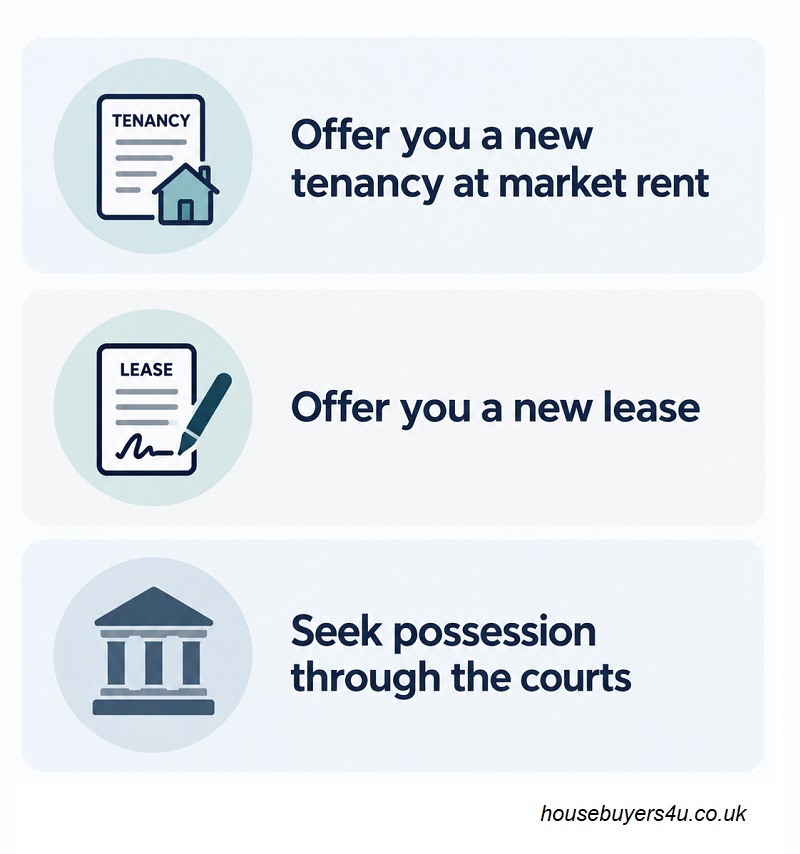
The Leasehold Advisory Service explains that after expiry, a landlord may:
-
Offer you a new tenancy at market rent
-
Offer you a new lease
-
Seek possession through the courts
Depending on the circumstances, you may retain security of tenure after the lease ends.
If your lease is approaching expiry, get legal advice before agreeing to leave or signing anything with the freeholder.
Why Does a Short Lease Make a Property Harder to Sell?
The problem is usually mortgageability.
Mortgage lenders set their own minimum lease requirements. UK Finance confirms that lenders specify the minimum unexpired term they will accept, and those requirements vary by lender.
For example, The Mortgage Works currently requires at least 70 years remaining at the start of the mortgage and at least 30 years remaining when the mortgage term ends. It refers leases between 70 and 85 years for additional consideration.
That means a short lease can:
-
reduce the number of buyers able to get a mortgage
-
push the property towards cash buyers
-
create longer negotiations
-
make buyers factor the cost of extending into their offer
There is no single lease length at which every property becomes unmortgageable.
Why Is 80 Years Important?
Yes, with a limited exception.
Estate agents are legally obliged to pass offers to the seller right up until contracts are exchanged.
This includes offers:
-
below the asking price
-
above the asking price
-
from cash buyers
-
from buyers needing a mortgage
-
received after another offer has already been accepted
A seller can, however, give written instructions that they do not want certain types of offers passed on.
For example, you could tell your agent not to contact you about offers below £300,000.
Outside an instruction like that, the agent should pass the offer on promptly.
Should You Extend the Lease Before Selling?
It can make sense if extending the lease would:
-
make the property acceptable to more mortgage lenders
-
increase the buyer pool
-
reduce uncertainty over extension cost
-
improve the property's saleability or value
But extending first is not automatically the best option.
Consider:
| Situation | What may make sense |
|---|---|
| Lease comfortably above lender requirements | Sell without extending |
| Lease approaching 80 years | Get extension advice before marketing |
| Lease already below 80 years | Compare extension cost with likely sale-price improvement |
| Very short lease | Expect a smaller mortgage-buyer pool |
| Need to sell quickly | Compare extending first with selling as-is |
A specialist leasehold valuer and solicitor can estimate the extension premium and process before you decide.
What We See With Short-Lease Properties
From the properties our team reviews, the biggest issue is often not that a short-lease home cannot be sold.
It is that fewer buyers can comfortably buy it.
A buyer may like the property but find that:
-
their lender rejects the remaining term
-
the extension cost is uncertain
-
they need more cash than expected
-
their solicitor raises additional lease concerns
That can turn an otherwise straightforward sale into repeated renegotiation.
Our view is simple: know the lease length and likely extension cost before you agree a selling strategy.
Expert insight from our property expert, Paul Gibbens:
“With a short lease, I would not wait until a buyer's solicitor discovers the problem. Check the remaining term before marketing and find out what an extension is likely to involve. Once buyers start worrying about mortgageability or an unknown extension bill, the negotiation usually becomes much harder.”
Can You Sell a Property With a Short Lease?
Yes.
Your main options are:
Extend Before Selling
This can make the property easier to mortgage and open it to more owner-occupiers.
Sell With the Short Lease
You avoid the extension cost upfront, but buyers may reduce their offers to reflect the shorter term and future extension cost.
Sell to a Cash Buyer
A cash buyer is not dependent on mortgage-lender lease-length requirements, although the short lease will still affect the property's value.
Housebuyers4u can buy leasehold properties directly, including homes where a short lease makes a conventional sale more difficult.
A direct cash offer will normally be below full open-market value, so compare the cost and time of extending first against the price available for selling as-is.
Find out how much we can Offer for your House